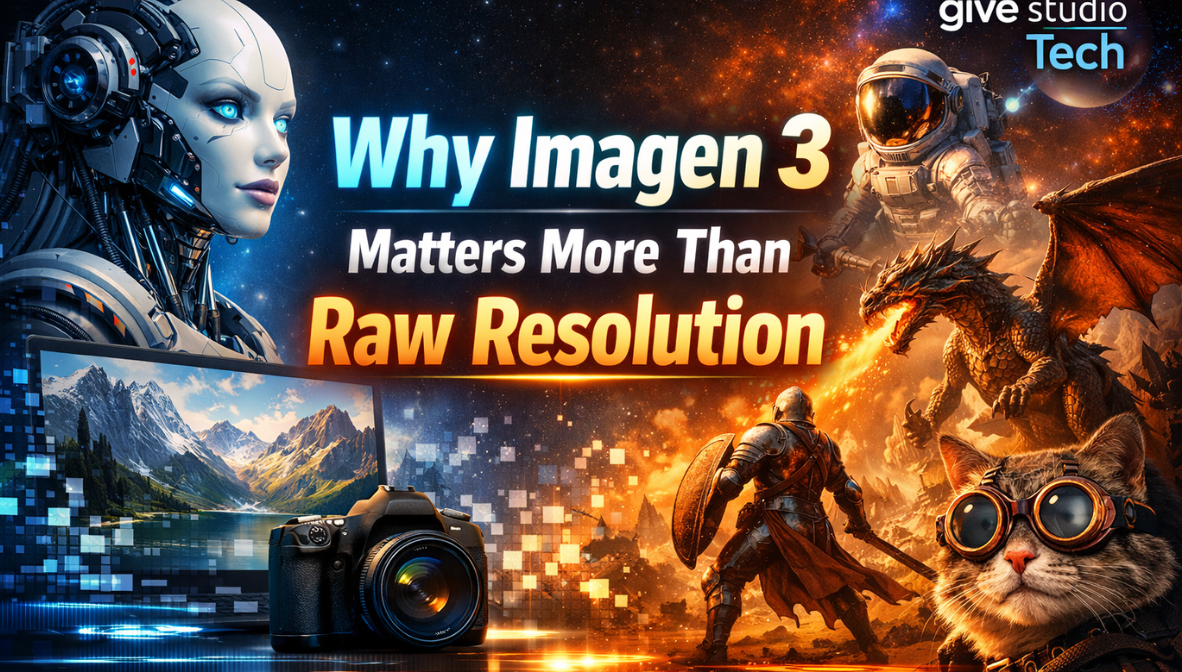
Why Imagen 3 Matters More Than Raw Resolution
For years, the conversation around image generation has been dominated by one metric: resolution. Bigger numbers were assumed to mean better visuals, sharper details, and higher quality output. But as AI-generated images become more common across creative, educational, and marketing workflows, that assumption is starting to fall apart.
What truly defines a great AI-generated image today isn’t just how many pixels it contains, but how intelligently those pixels are used. From realistic textures to accurate text rendering and visual coherence, modern image generation is shifting toward quality that feels human rather than mathematically impressive. This is where Imagen 3 enters the conversation—and why it matters more than raw resolution ever did.
In recent discussions around imagen 3 and tools like Invideo that integrate advanced image generation into broader creative workflows, the focus has clearly moved toward realism, semantic understanding, and usability rather than pixel counts alone. That shift signals a deeper evolution in how AI understands and produces visuals.
The Problem With Chasing Raw Resolution
High Resolution Doesn’t Equal High Quality
Resolution simply refers to the number of pixels in an image. While higher resolution can make an image look sharper, it doesn’t guarantee realism, clarity, or usefulness. An image can be technically large yet still feel artificial, distorted, or visually confusing.
Many early AI systems prioritized scaling images up without fully understanding what they were depicting. The result was often uncanny visuals—faces with strange proportions, unreadable text, or backgrounds that dissolved into noise when viewed closely.
When Bigger Images Create Bigger Problems
Raw resolution can even introduce new challenges. Large image files take longer to generate, are harder to edit, and often require post-processing to fix inconsistencies. For creators working across multiple formats—social posts, presentations, or video—this creates friction rather than efficiency.
What most users actually want is not “bigger,” but “better”: images that look believable, communicate ideas clearly, and integrate smoothly into downstream creative work.
The Shift Toward Perceptual Quality
As AI adoption grows, perceptual quality has become the real benchmark. This includes how natural lighting looks, whether textures behave realistically, and whether the image aligns with human expectations. Resolution plays a role, but it’s no longer the star of the show.
What Makes Imagen 3 Different
Understanding Images, Not Just Rendering Them
Imagen 3 represents a shift from brute-force image generation to context-aware creation. Instead of focusing on pixel density alone, it emphasizes understanding prompts, relationships between objects, and how humans perceive visual realism.
This allows generated images to feel intentional rather than accidental. Objects sit naturally in a scene. Facial expressions make sense. Text appears legible and properly placed.
Semantic Accuracy Over Pixel Count
One of the defining strengths of Imagen 3 is semantic accuracy—the ability to correctly interpret what the user is asking for and translate that into a coherent visual. A street scene looks like a street, not a collage of unrelated elements. A product mockup resembles something that could exist in the real world.
This matters far more than ultra-high resolution when images are used for storytelling, education, or visual communication.
Realism That Scales Across Use Cases
Because the model prioritizes realism at the conceptual level, images generated with Imagen 3 remain effective whether they’re viewed on a mobile screen or embedded into a video timeline. The quality holds up without requiring excessive resolution increases.
Imagen 3 in Modern Creative Workflows
Beyond Standalone Images
Today, images are rarely used in isolation. They appear in blog posts, presentations, landing pages, and videos. This is where intelligent image generation becomes essential.
Platforms like Invideo integrate image generation into broader creative pipelines, allowing users to generate and edit images using Imagen 3 capabilities for photorealism, accurate text rendering, and fast generation—especially when images are destined for video creation rather than static display.
Supporting Visual Storytelling
Instead of producing “pretty pictures,” modern image models are expected to support narratives. Whether it’s explaining a concept, visualizing a scenario, or enhancing a video sequence, the image must contribute meaning.
By focusing on coherence and intent, Imagen 3 makes visuals more adaptable for storytelling contexts where raw resolution offers diminishing returns.
Faster Iteration, Better Results
Lower dependence on extreme resolution also means faster generation and easier iteration. Creators can refine ideas quickly, experiment with styles, and adjust visuals without waiting for massive files to process.
How This Impacts AI Video Creation
Images as Building Blocks for Video
In video workflows, images often act as frames, overlays, or scene elements. Excessively high-resolution images provide little advantage once they’re placed into a video timeline, where motion, pacing, and composition matter more.
This is why image quality optimized for realism and clarity works better than sheer size—especially when paired with modern AI video apps that prioritize speed and flexibility.
Consistency Across Frames and Scenes
Another overlooked aspect is visual consistency. When images are generated with a deeper understanding of structure and lighting, they blend more naturally across multiple scenes. This reduces jarring transitions and improves the overall viewing experience.
Integration With AI Video Apps
AI video apps increasingly rely on intelligent image generation to automate scene creation, background visuals, and transitions. In these contexts, semantic accuracy and realism are far more valuable than oversized images that slow down production.
Why Resolution Still Matters—But Less Than Before
The Right Amount, Not the Maximum
This isn’t to say resolution is irrelevant. There is still a baseline level of sharpness required for professional visuals. However, once that threshold is met, additional pixels add little value compared to better composition, lighting, and realism.
Human Perception Is the Real Benchmark
Most viewers don’t consciously evaluate resolution. They react emotionally to what they see. Does the image feel real? Does it make sense? Does it support the message?
Imagen 3’s strength lies in optimizing for these human responses rather than chasing technical extremes.
Practical Advantages for Creators
Lower emphasis on raw resolution also reduces storage costs, improves performance, and simplifies collaboration—practical benefits that matter in real-world workflows.
The Role of Sora AI Video Generator in This Shift
Moving Beyond Visual Spectacle
The rise of tools like sora AI video generator reflects the same broader trend: prioritizing coherence, realism, and narrative flow over flashy technical specs. Video generation, much like image generation, benefits more from understanding motion and context than from sheer visual density.
Image Quality as a Foundation for Video
When image generation models like Imagen 3 focus on perceptual quality, they create a stronger foundation for video tools. Scenes feel grounded, transitions feel natural, and the final output feels intentional rather than stitched together.
Where Invideo Fits In
Within this ecosystem, invideo sits at the intersection of image and video creation, using advanced image generation capabilities—such as photorealism and accurate text rendering—to support fast, practical video workflows. The emphasis remains on usability and realism rather than pushing resolution for its own sake.
The Future of Image Generation Is Context-Driven
Smarter Models, Not Bigger Files
As AI models evolve, we can expect even less emphasis on raw resolution and more focus on contextual understanding. The goal is not to overwhelm users with detail, but to deliver visuals that align with human expectations and creative intent.
From Technical Metrics to Creative Outcomes
Success will increasingly be measured by outcomes: clearer communication, better storytelling, and faster production. Imagen 3 represents a step in this direction by redefining what “quality” actually means.
A New Standard for Visual AI
In the long run, the models that matter most won’t be the ones that generate the largest images—but the ones that generate the most useful ones.
Conclusion: Why Imagen 3 Truly Matters
Raw resolution had its moment, but that era is fading. In a world where visuals are everywhere and speed matters, intelligence, realism, and coherence are the new benchmarks.
Imagen 3 matters because it reflects this shift. By focusing on how images are understood, perceived, and used—rather than how large they are—it aligns image generation with real creative needs. Whether images end up in articles, presentations, or AI-driven video workflows, the future belongs to models that prioritize meaning over megapixels.
And as creative tools continue to blend image and video generation into unified workflows, that distinction will only become more important.
About the Author