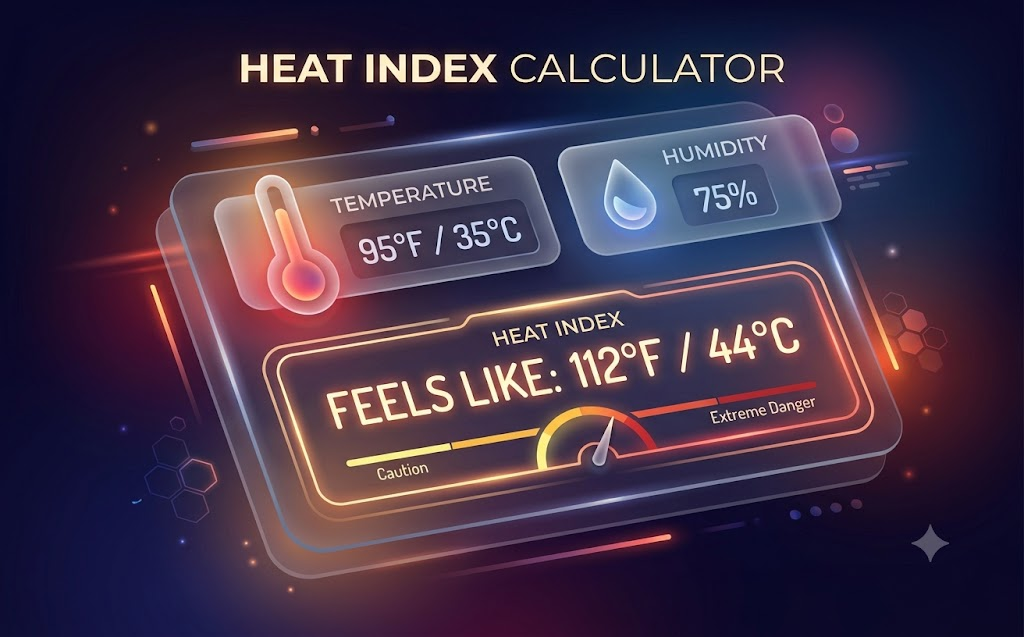
Heat Index Calculator
When summer temperatures rise, simply checking the air temperature is no longer enough to understand how hot it actually feels. Humidity plays a major role in determining how the human body experiences heat. This is where a Heat Index Calculator becomes extremely useful. It combines air temperature and relative humidity to estimate the “feels like” temperature, helping people make informed decisions about outdoor activities.
Whether you are planning a workout, organizing an outdoor event, or simply deciding the best time to go outside, understanding the heat index can help reduce the risk of heat-related illnesses. This guide explains everything you need to know about the heat index, how it is calculated, why it matters, and how to use a Heat Index Calculator effectively.
What Is a Heat Index?
A heat index is a measurement that combines the actual air temperature with relative humidity to estimate how hot it feels to the human body. High humidity reduces the body’s ability to cool itself through sweating because sweat evaporates more slowly.
For example, if the air temperature is 90°F with low humidity, it may feel close to 90°F. However, if the humidity reaches 70%, the perceived temperature can exceed 100°F. This difference is exactly what a Heat Index Calculator measures.
The heat index is particularly important during the summer months when heat waves become more frequent and prolonged.
How a Heat Index Calculator Works
A Heat Index Calculator uses two primary inputs:
- Air temperature
- Relative humidity
The calculator processes these values using a scientific formula developed by weather experts. Within seconds, it estimates the apparent temperature, commonly known as the “feels like” temperature.
Modern calculators often display additional information such as:
- Heat risk categories
- Health warnings
- Safety recommendations
- Outdoor activity guidance
Some advanced versions also include wind speed and solar radiation for greater accuracy.
Why Humidity Changes the Way Heat Feels
Sweating is the body’s natural cooling system. As sweat evaporates, it removes heat from your skin.
When humidity is high, the air already contains a large amount of moisture. This slows evaporation, making it difficult for the body to cool itself. As a result, you feel much hotter than the actual temperature.
A Heat Index Calculator accounts for this relationship between temperature and humidity, providing a more realistic estimate of outdoor conditions.
Benefits of Using a Heat Index Calculator
Using a Heat Index Calculator offers several practical advantages for people of all ages.
It improves personal safety by helping users avoid dangerous heat exposure. It allows athletes and outdoor workers to schedule activities during cooler periods of the day. Parents can determine whether conditions are safe for children to play outside.
Travelers also benefit by checking local heat conditions before sightseeing or hiking. Farmers, construction workers, landscapers, and delivery personnel rely on heat index readings to reduce the risk of heat exhaustion.
Even homeowners planning gardening or yard work can use the calculator to choose safer working hours.
Heat Index Risk Levels
Most Heat Index Calculator tools classify results into different danger categories.
Caution
Heat index values between 80°F and 90°F may cause fatigue during prolonged outdoor activity. Staying hydrated is recommended.
Extreme Caution
Values between 90°F and 103°F increase the likelihood of heat cramps and heat exhaustion.
Danger
Heat index readings from 103°F to 124°F indicate a high risk of heat-related illnesses. Outdoor exposure should be limited.
Extreme Danger
Heat index values above 125°F are considered life-threatening. Heat stroke becomes highly likely without immediate precautions.
Understanding these categories helps users make safer decisions during hot weather.
Who Should Use a Heat Index Calculator?
A Heat Index Calculator is valuable for many different groups.
Outdoor workers use it to plan safer work schedules. Athletes monitor heat stress before competitions or training sessions. Schools may check the heat index before sports practices.
Parents can determine whether playground visits are safe for children. Elderly individuals, who are more vulnerable to heat-related illnesses, benefit from monitoring daily conditions.
Pet owners also use the calculator because animals can overheat quickly during humid weather.
Heat Index vs Air Temperature
Many people mistakenly believe that air temperature tells the complete story.
For example:
Temperature: 95°F
Humidity: 20%
Heat Index: Around 94°F
Now consider:
Temperature: 95°F
Humidity: 70%
Heat Index: Approximately 122°F
Although the thermometer reads the same temperature, the body experiences dramatically different conditions. This demonstrates why a Heat Index Calculator is far more informative than temperature alone.
Common Uses of Heat Index Calculators
Heat index calculations have become an important part of everyday planning.
Weather forecasters include heat index values in daily reports. Emergency management agencies issue heat advisories based on heat index forecasts.
Sports organizations adjust practice schedules to protect athletes. Event planners evaluate outdoor safety before concerts, festivals, and sporting events.
Construction companies may require additional breaks or reduced work hours when dangerous heat index values occur.
These applications help reduce heat-related injuries across many industries.
How to Reduce Heat Exposure
After checking a Heat Index Calculator, several simple actions can reduce health risks.
Drink water regularly, even before feeling thirsty. Wear lightweight, loose-fitting clothing made from breathable fabrics.
Avoid strenuous outdoor activities during the hottest part of the day, usually between late morning and early evening.
Take frequent breaks in shaded or air-conditioned locations. Use sunscreen, sunglasses, and wide-brimmed hats for additional protection.
Never leave children or pets inside parked vehicles, even for a short period.
Heat-Related Illnesses
Ignoring dangerous heat index levels can lead to serious medical conditions.
Heat cramps usually begin with painful muscle spasms caused by dehydration.
Heat exhaustion includes symptoms such as heavy sweating, dizziness, weakness, nausea, headache, and rapid pulse.
Heat stroke is the most severe condition. Body temperature rises rapidly, sweating may stop, confusion develops, and unconsciousness can occur. Heat stroke requires immediate emergency medical treatment.
A Heat Index Calculator helps reduce the likelihood of these illnesses by encouraging preventive action.
Tips for Accurate Heat Index Readings
To obtain reliable results, enter accurate weather information into the calculator.
Measure temperature in shaded areas rather than direct sunlight. Use current humidity values from trusted weather sources.
Update readings throughout the day because weather conditions can change rapidly.
Remember that direct sunlight can increase the perceived temperature by up to 15°F, even beyond the calculated heat index.
These practices improve the usefulness of any Heat Index Calculator.
Heat Index and Climate Change
Global temperatures continue to rise, making extreme heat events more common in many regions.
Higher temperatures often increase atmospheric moisture, resulting in even higher heat index values. This combination creates more dangerous outdoor conditions.
Cities with large amounts of concrete and asphalt also experience the urban heat island effect, where temperatures remain elevated both day and night.
As climate patterns change, Heat Index Calculator tools are becoming increasingly valuable for public health planning and individual safety.
Choosing the Right Heat Index Calculator
Many online calculators offer similar basic functions, but some provide additional helpful features.
Look for calculators that display clear danger categories, health recommendations, mobile compatibility, and real-time weather integration.
Some advanced calculators include forecasts for future hours, allowing users to plan activities before conditions become hazardous.
Simple interfaces with accurate calculations are usually the best choice for everyday use.
Conclusion
A Heat Index Calculator is more than a convenient weather tool. It provides essential information about how environmental conditions affect the human body. By combining air temperature and humidity, it reveals the true level of heat stress that people experience outdoors.
Whether you are exercising, working outside, traveling, or simply planning your day, checking the heat index can help prevent heat exhaustion, heat stroke, and other serious health problems. As extreme heat becomes more common around the world, understanding and using a Heat Index Calculator is one of the simplest ways to stay informed, protect your health, and make smarter decisions during hot weather.
About the Author